


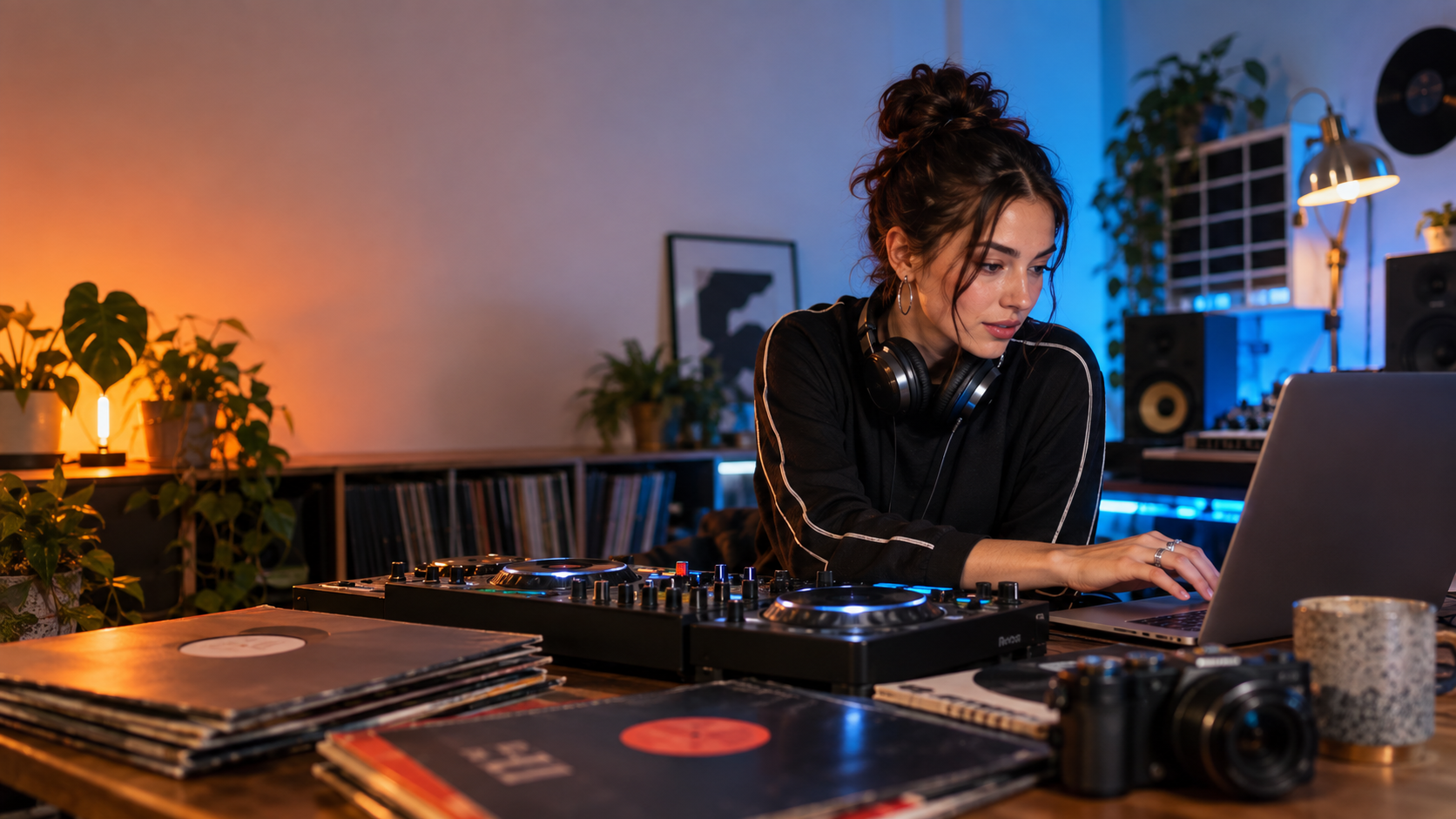
You do not need a massive following, a manager or a glossy photoshoot to have a DJ brand. You need a clear signal. When a promoter, collaborator or new listener lands on your page, they should be able to understand three things quickly: who you are, what you play and where to hear you next.
This is a practical 30-day plan for getting that sorted. It is not about inventing a character or copying the DJ you rate most. It is about making your real sound easier to recognise, remember and book.
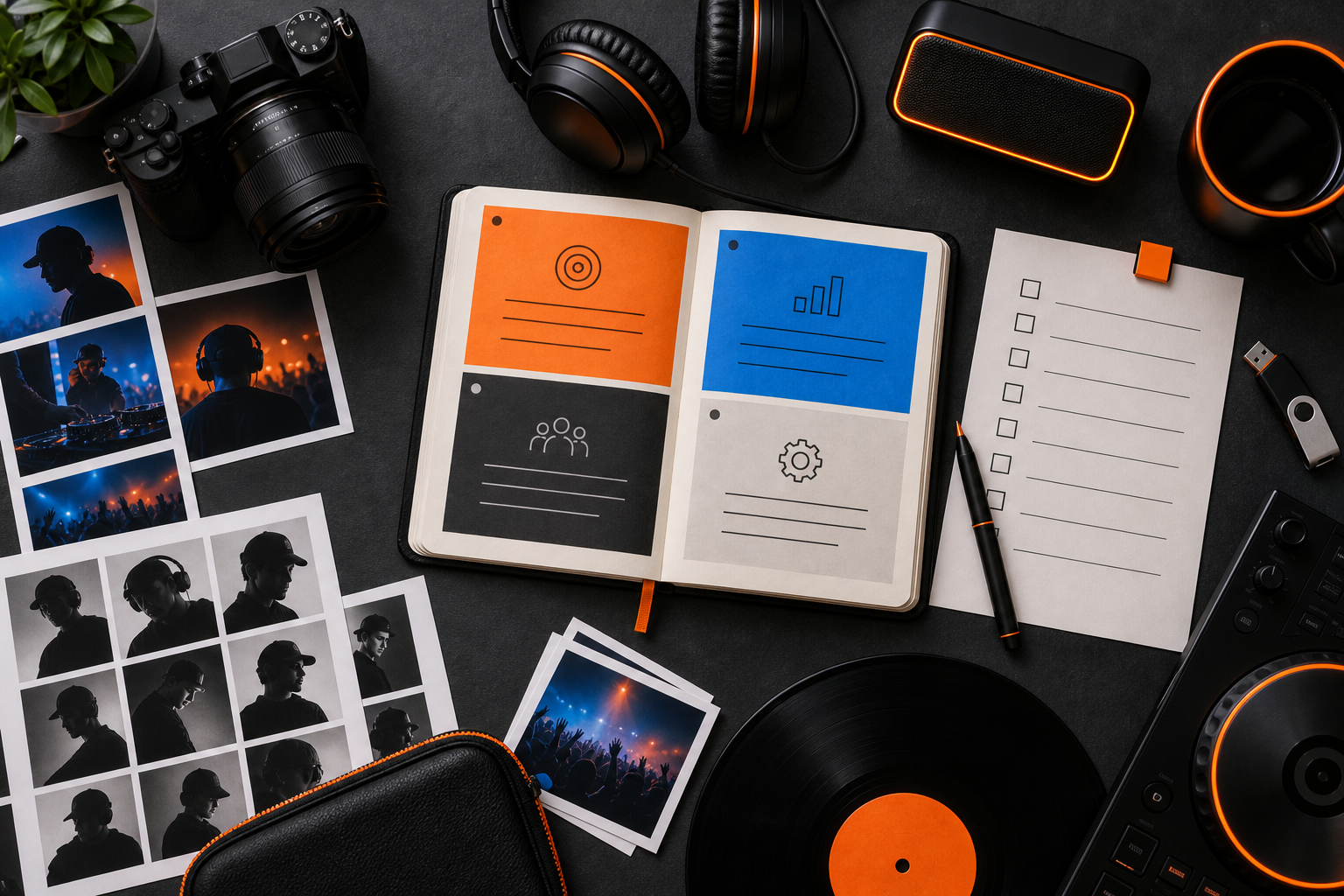
Your brand is the repeated impression people get from your name, sound, images, words and links. It is not just a logo.
Think of it as a shortcut. A good one helps someone say: “I know what this DJ is about.” That could mean deep and percussive house, high-energy garage, leftfield disco, hypnotic techno or a warm, party-first selector. The point is not to squeeze yourself into one box. It is to make your direction legible.
Your aim for the next 30 days: one consistent name, one clear line about your sound, a small set of quality images, matching profiles, one strong mix and one simple place where people can find everything.
Before you make flyers, upload mixes or ask people to follow you, check your DJ name across the places you are most likely to use. Search Google, Instagram, SoundCloud, YouTube, Spotify, TikTok, Facebook and Resident Advisor if it is relevant to your scene.
You are looking for more than whether the exact username is free. Is another artist already releasing music under that name? Are they active in the same country or genre? Would a promoter, fan or venue be likely to confuse you?
If the exact handle is unavailable, keep the workaround clean and repeatable. Adding “music”, “dj”, a location or an underscore can work. Random numbers and three different spellings across platforms make you harder to find.
SoundCloud recommends keeping your display name and profile URL aligned. Its profile URLs use lowercase letters, numbers, underscores and hyphens, and changing an existing URL can affect links you have already shared. YouTube handles are unique and become part of the channel URL, so treat them as a long-term choice rather than a throwaway setting.
Do not write “DJ based in London, available for bookings.” That tells people nothing about the room you create.
Use this framework instead:
[DJ name] plays [2 to 3 connected sounds] for [the feeling, time of night or crowd].
Example: “Maya Vale plays warm house, broken beats and rolling UKG for late-night dancefloors.”
It is short enough for a bio, useful enough for a promoter and specific without pretending you only play one thing forever. You can refine it later. For now, it gives your pages a shared starting point.
You do not need a full brand pack yet. You do need a profile image that is clear at phone size, one or two usable photos and a visual direction you can repeat.
Ask a photographer friend, trade a guestlist place for photos or organise a simple shoot around a rehearsal, studio or small set. Phone photos can work if the lighting is decent and the image is intentional. Dark, blurry crowd shots rarely do you any favours.
Pick two or three things you want repeated: colours, texture, lighting, type treatment, framing or clothes. Keep it rooted in the music you actually play. If you are an intimate vinyl selector, your imagery can feel warm and tactile. If you play high-speed club sets, sharper flash photography and bolder contrast may fit better.
Save 10 references into a private folder. Look for patterns, not templates to copy. Are the photos close-up or wide? Is the colour warm or cold? Is the movement chaotic or calm? This makes it easier to brief someone or choose your own pictures.
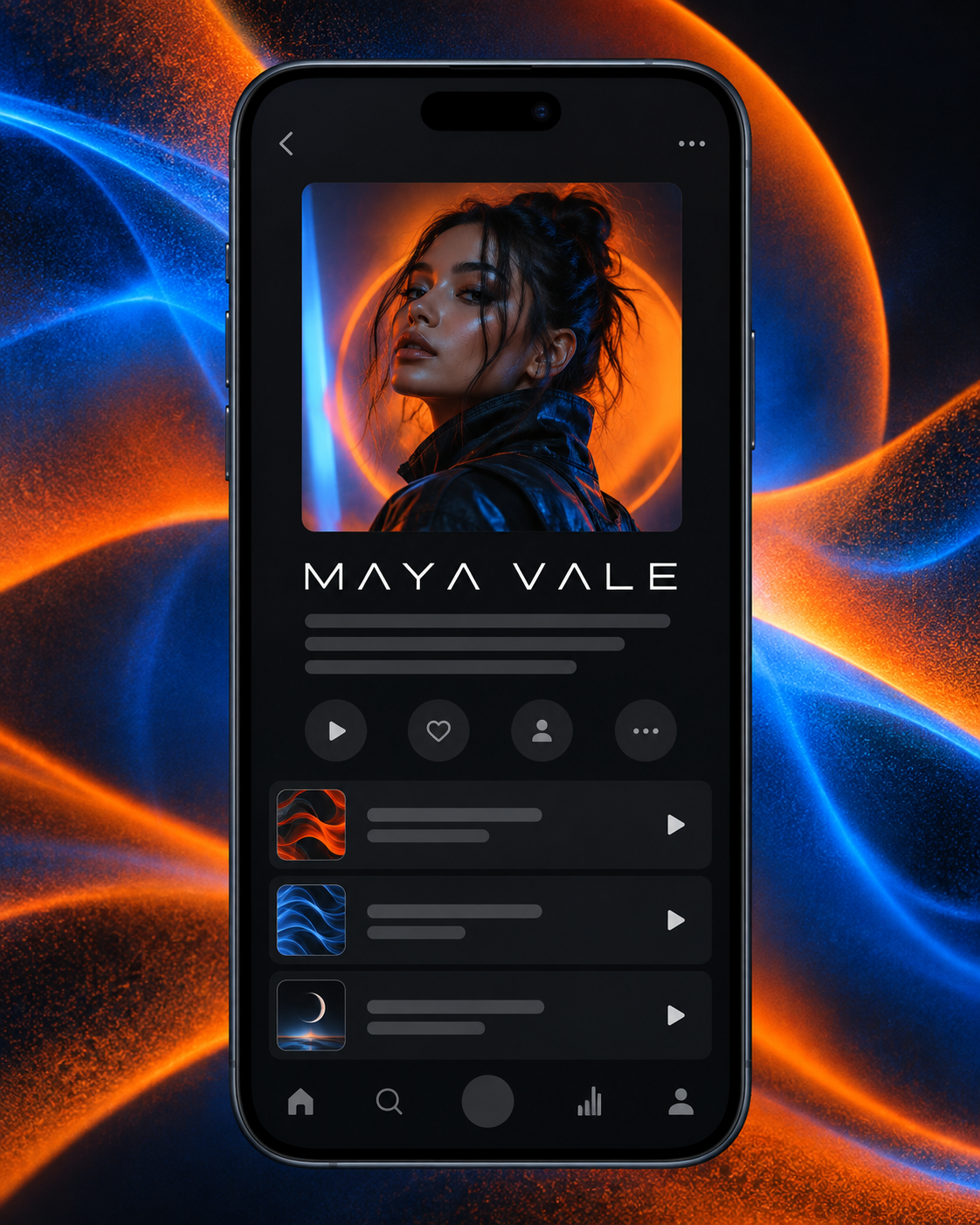
Use the same profile image everywhere at first: Instagram, SoundCloud, YouTube, TikTok and any link page. It is not boring. It is how people recognise that the Maya Vale on a mix link is the same Maya Vale they saw on a lineup poster.
Consistency is useful because people rarely discover you in the order you expect. Someone might hear a SoundCloud mix first, see you tagged in an Instagram Story later, then search YouTube the following week. Every profile should confirm they have found the same artist.
Good short bio: “Maya Vale | House, broken beat and UKG | London | Latest mix below | bookings: hello@mayavale.com”
Weak short bio: “Music lover. DJ. Vibez. Available. Follow for more.”
The first version gives a person enough information to act. The second makes them do the work.
Do not make people choose between 12 links. Start with one main destination, then keep the rest tidy underneath it. Your top link should change depending on the moment: a new mix, an upcoming event, a release or a booking page.
On YouTube, a channel can be customised with a profile image, banner, description, handle and site links. YouTube says channel profile links can showcase up to 14 links, although less is often more. Make the first one the most useful.
One important YouTube detail: links in Shorts descriptions and comments are not clickable. If you want to direct people elsewhere from a Short, use your channel profile links or an appropriate related-video link, rather than assuming a pasted URL will do the job.
Your first mix is your calling card. It gives a promoter something more useful than a list of influences. It shows taste, pacing, energy and whether you understand the kind of set you are asking to play.
Make a mix that sounds like a set you would be proud to play in the room you want to be booked for. Do not try to cover every genre you like. A clear 45 to 60-minute journey is usually more useful than two hours of everything.
Give it a title that lets someone understand the context. “Maya Vale: Late-Night House & Broken Beat Mix” is clearer than “New Mix 4”. Add a simple description with the mood, tracklist where appropriate and a next step, such as your booking email or a link to your next event.
Before sharing, listen back on headphones and a normal speaker. Check levels, transitions, the beginning and ending, and whether the set has a shape. Then ask one or two honest music friends for feedback. You are looking for useful notes, not a committee.
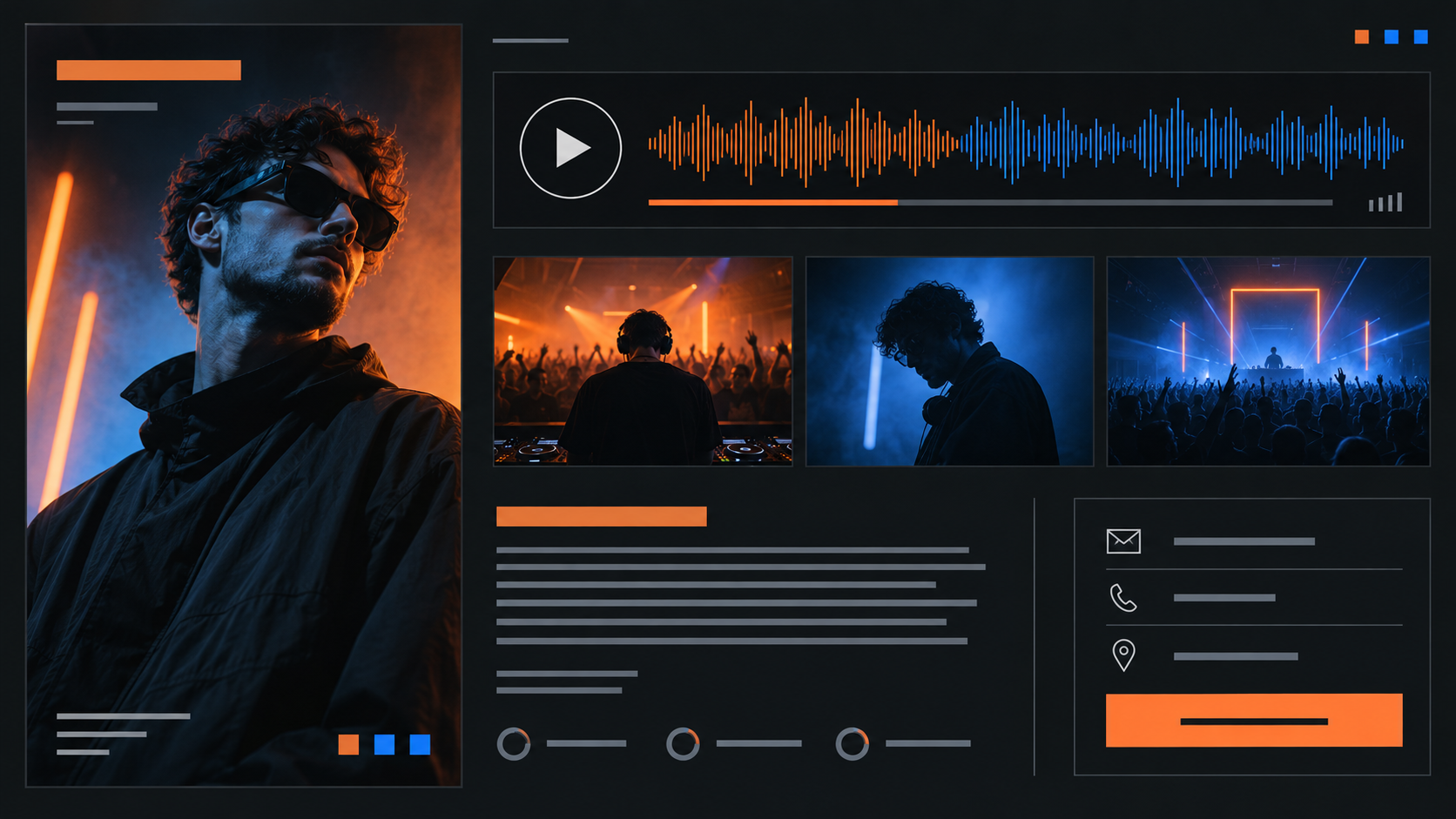
An electronic press kit is simply a tidy place for a promoter, venue or collaborator to find what they need. At the start, it can be one web page, a simple shared folder or a well-organised link page. It does not need to be a huge PDF.
Include:
[Name] is a [city]-based DJ whose sets move through [sound one], [sound two] and [sound three]. Known for [a truthful strength, such as warm selections, high-energy pacing or leftfield blends], they play for [the kind of room or feeling]. Recent highlights include [real event, mix series or project].
Example: “Maya Vale is a London-based DJ whose sets move through warm house, broken beat and rolling UKG. Known for playful late-night selections and a steady build in energy, she plays for dancefloors that want groove without standing still. Recent highlights include a guest mix for Night Shift Radio and a monthly all-vinyl residency at The Corner Room.”
If you do not have highlights yet, leave that sentence out. A good bio does not need to exaggerate.
There is nothing wrong with being early in your journey. A clean profile, one good mix and honest wording are more convincing than fake headline gigs or a bio packed with vague superlatives.
New ideas are part of making music. Your public name, main image and link structure do not need to change with every new inspiration. Give people time to recognise you.
When somebody asks for a mix, send the one that represents you best. When they ask for your EPK, send the clean link. Keep the extra folders, unfinished projects and alternate mixes for when they are relevant.
A promoter should never have to hunt for your name, city, sound, latest mix or booking contact. If you make those five things easy, you are already more bookable than plenty of people with much bigger feeds.
Final thought: your DJ brand is not a costume. It is a promise about the kind of music, energy and experience people can expect when they press play or walk into your set. Keep it honest, make it easy to find and give it time to grow.
Got your first proper mix, EPK or visual set-up ready? Bring it to the Naughty Parrot community. Keep an eye on our events, explore more practical ideas on the Naughty Parrot blog and share your next project with us.